Michel van Royen


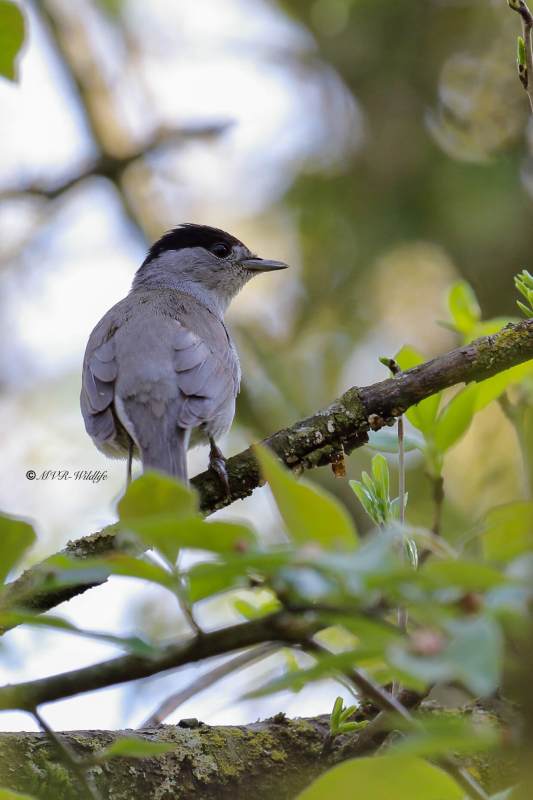
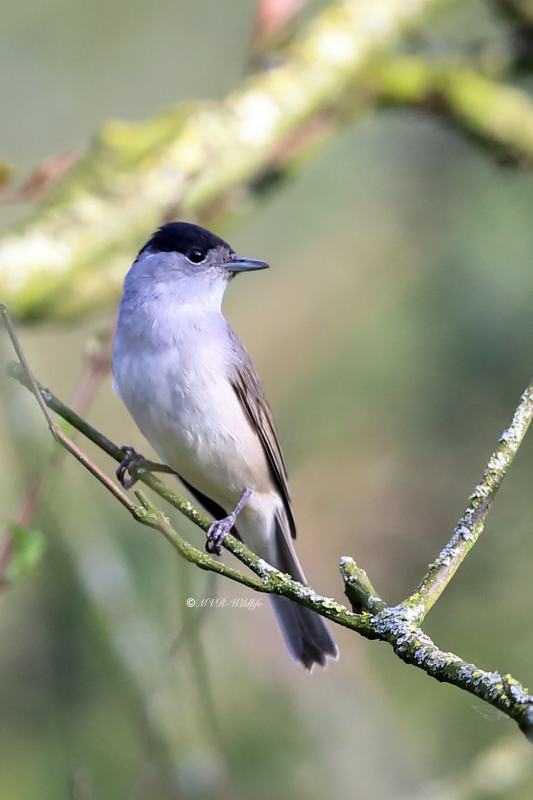
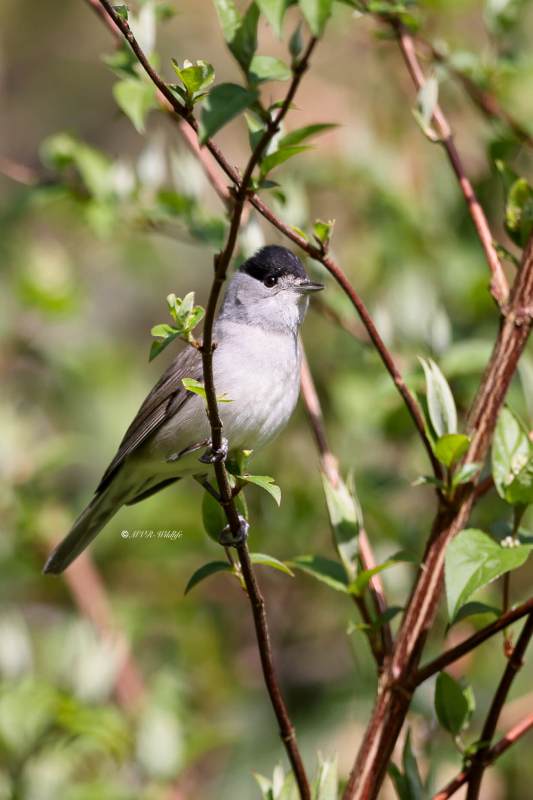
Blackcap
Habitat: Of the four Sylvia species breeding in Belgium, the Blackcap is the most closely associated with vegetation consisting of tall shrubs or even trees. It occupies a wide range of habitats, from tall deciduous forests to large shrubbery. This means that the species can be found, for example, in the middle of the Sonian Forest, where the trees are sufficiently far apart to allow the development of brambles and natural regeneration. It is also found in old parks with alternating isolated trees and shrubbery. The presence of a few conifers is always appreciated. Elsewhere, the blackcap occurs along forest edges, in thickets of sea buckthorn and elder in the dunes and in dense hedges with hawthorn, blackthorn and a few trees (oak, hornbeam, etc.). Around the trees and shrubs there is usually a dense layer of herbs, often with many nettles, i.e. a type of biotope that is common in Belgium. The species is regularly found in towns, parks and even in small isolated gardens within dense buildings.
Appearance: Widespread and common summer visitor in Europe, wintering in the south and west. In Belgium and the Netherlands, it is a very numerous breeding bird – year-round resident – migratory – passage migrant and winter visitor in extremely small to very small numbers.
Breeding season: May – August, nest in bushes, 3 – 6 eggs.
Characteristics: Length 13.5 – 15 cm, wingspan 20 – 23 cm, weight 16 – 22 grams, age 11 years.
Food: Insects, berries, in spring also nectar and pollen.