Michel van Royen


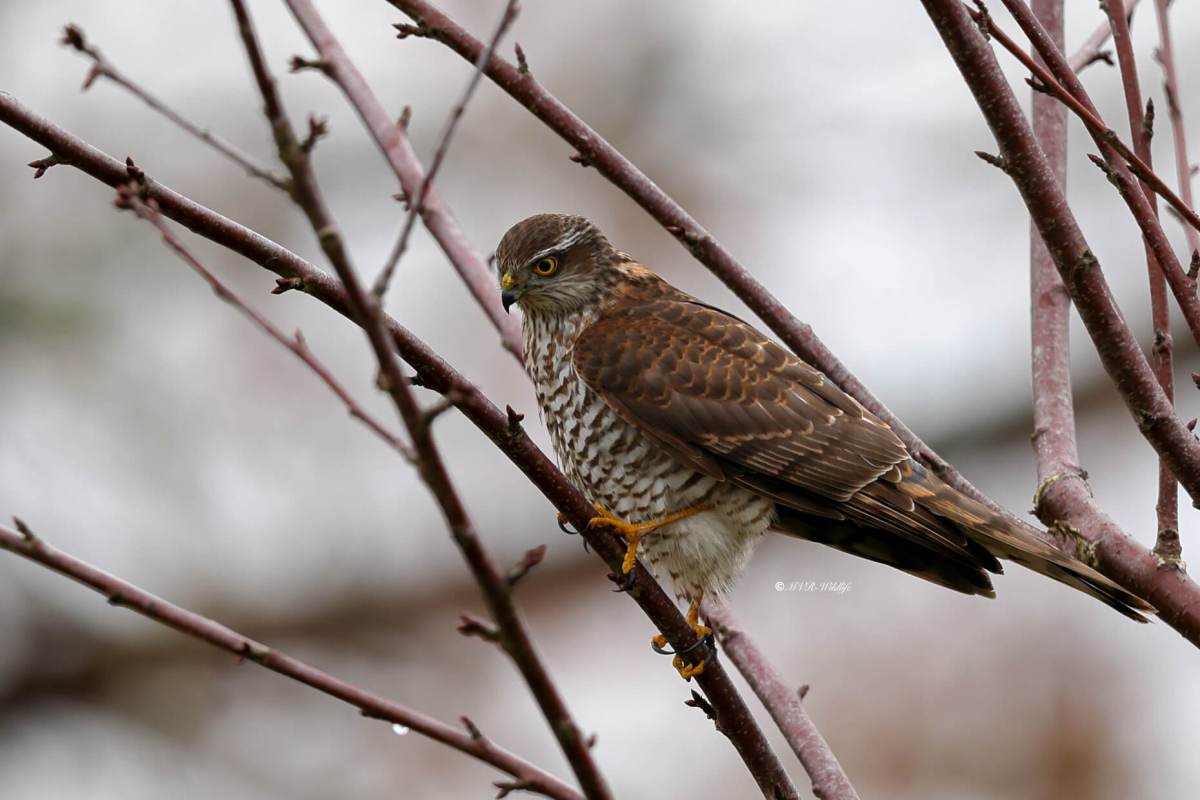
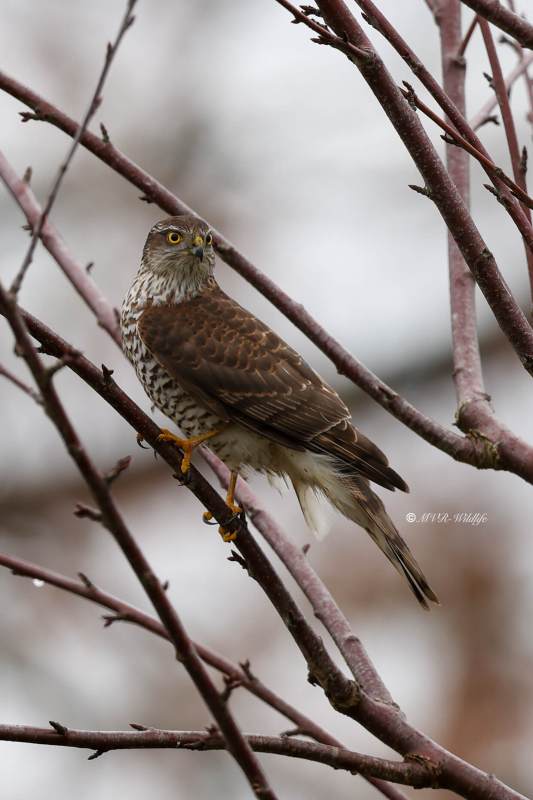
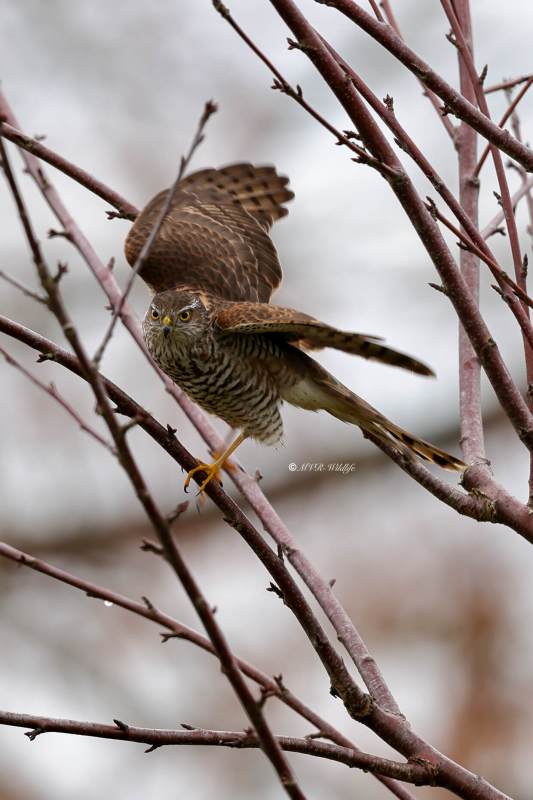
Eurasian Sparrowhawk
Habitat: The sparrowhawk prefers forests with clearings and areas with scrub. It leads a secretive life, even where it is not rare. It is more commonly seen in winter, when it hunts sparrows and finches near farms and bird feeders.
Appearance: Breeds almost throughout Europe, except in Iceland, northern Scandinavia and the steppes of eastern Europe. In Belgium and the Netherlands, it is a fairly scarce breeding bird, a year bird, a migrant and a winter visitor in fairly small to large numbers.
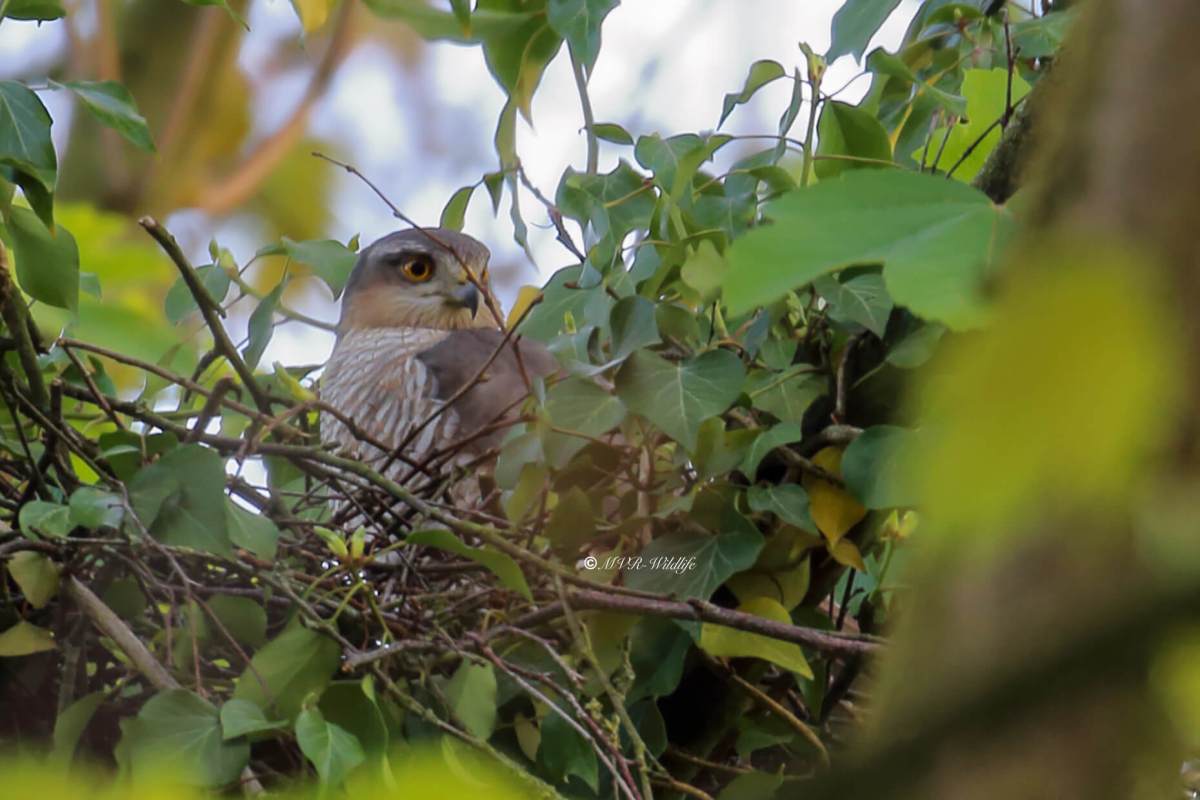
Breeding season: May to July, tree nest, a new nest is built every year, usually only a few hundred metres from the old nest. The nest is made of brushwood that the birds break off from trees. The nest is usually located in light coniferous forest and still under the lower green branches. Near the nest, one finds the main plucking site, where the male transfers the prey to the female. It is usually a tree stump, surrounded by scattered feathers, legs and beaks of prey animals, 4-6 eggs.
Characteristics: Length 29-41 cm, wingspan 55-80 cm, weight 110-340 grams, lifespan 20 years.
Food: The sparrowhawk is a specialised bird hunter. The small male is capable of catching thrushes and the larger female can even overpower pigeons after a long struggle. The sparrowhawk hunts from an ambush, swooping down on its prey at lightning speed, or sneaking up stealthily and suddenly diving into a frightened flock of small birds. During the hunt, it follows every move of its chosen victim and finally grabs it with its claws stretched far forward. The sparrowhawk is a reckless hunter, pursuing its prey into houses, into human crowds and narrow crevices. Some of them are therefore killed during the hunt. Where sparrowhawks hunt, one finds plucking places and often the species to which the prey belonged can still be identified from the feather remains.