Michel van Royen


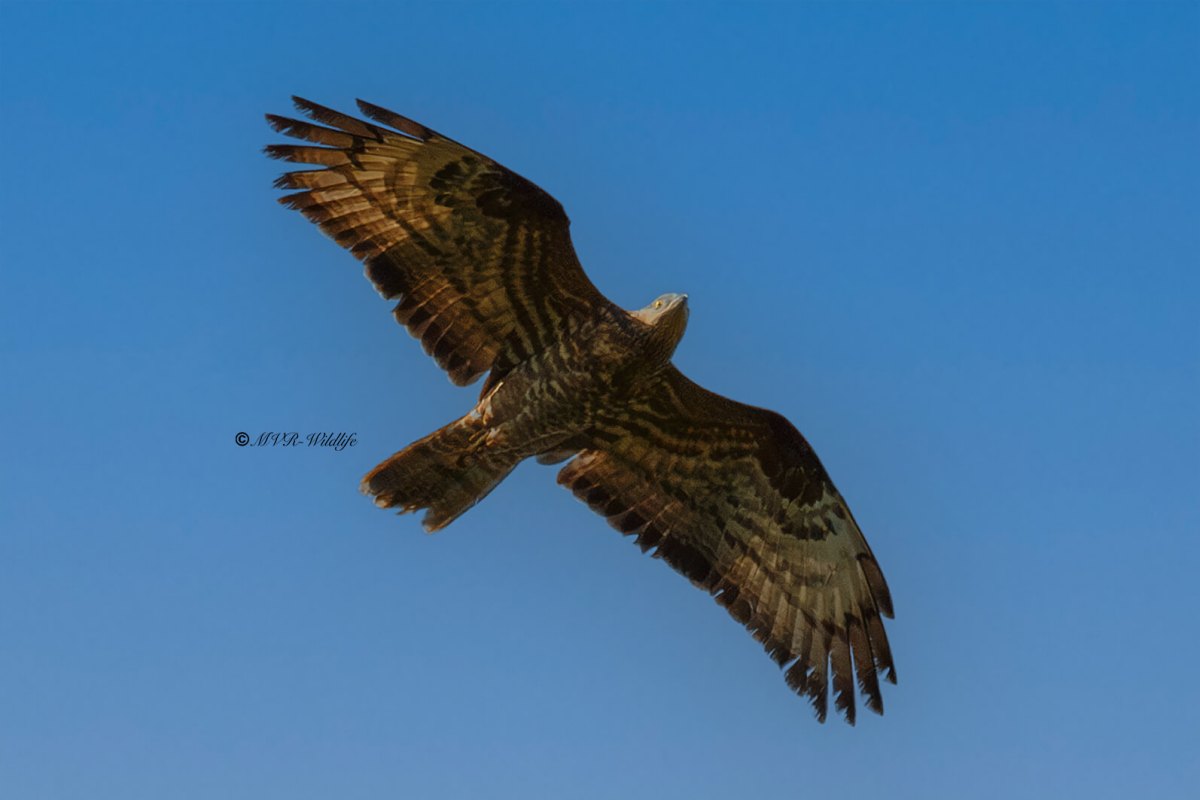
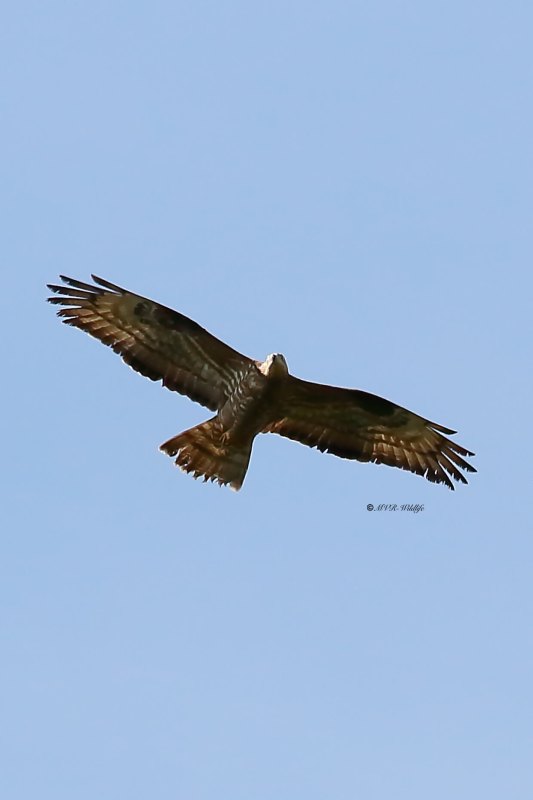
European Honey
Habitat: The honey buzzard prefers open, expansive forests with lots of clearings and open spaces where it can find nests of hymenoptera. It avoids spruce plantations, but the species occurs locally in pine forests with heath undergrowth.
Appearance: Common summer visitor in Europe, winters in tropical Africa. Rare breeding bird in Belgium and the Netherlands – migratory – small numbers pass through.
Breeding season: May – August, nest in trees – the eyrie is preferably built on a crow’s nest from previous years and is usually very high. If the birds build the nest themselves, they often choose a fork in a side branch as a location. The eyrie is used for several years in succession and is regularly lined with fresh, green branches before the eggs are laid. 2 – 3 eggs.
Characteristics: Length 52 – 59 cm, wingspan 113 – 135 cm, weight 400 – 1050 grams, age 17 years.
Food: The honey buzzard is a highly specialised insectivore, feeding mainly on wasp brood in summer. It spots the entrance to an underground wasp nest from a lookout post and then digs it out. In doing so, it sometimes disappears almost completely underground. Its claws are not as strongly curved as those of most other birds of prey and are therefore suitable for digging. The wasps can do little against the predator, as its face is protected by special, hard feathers. It even ventures into the nests of the giant hornet, usually eating only the brood, the larvae, but sometimes also the adult insects, including the sting. In addition to wasps, the honey buzzard also catches other insects such as grasshoppers and caterpillars, which it catches with its beak. While searching for food, it often walks around on the ground in a crow-like manner. In the wasp-poor season, it also feeds on frogs, snakes, young birds and mice.